Trade news
Extending Deadlines for Submissions by Importers of USMCA Automobiles to Determine U.S. Content
On November 27, 2026, Commerce extended the U.S. content deadlines that limit USMCA auto tariffs to the non-U.S. part of a car's value. Existing approvals now last for cars imported before March 1, 2027, and new documentation is due December 30, 2026.
USMCA auto tariffs: the key numbers
The Section 232 tariff on imported cars applies to the full vehicle value unless Commerce has approved a model's U.S. content. These dates and rates decide what you pay in USMCA auto tariffs.
25% on non-U.S. content
Proclamation 10908 set a 25% tariff on imported automobiles. For a USMCA-qualifying model with an approval, the tariff applies only to the value of its non-U.S. content.
March 1, 2027: current approvals expire
Approvals issued under the earlier procedures now stay valid for cars imported before March 1, 2027. The August notice had set that cutoff at December 1, 2026.
December 30, 2026: new submissions due
To keep the lower duty for cars imported on or after March 1, 2027, file new documentation by December 30, 2026. Those approvals cover cars imported before March 1, 2028.
November 30, 2027: the next year's deadline
For cars imported from March 1, 2028 to February 28, 2029, documentation is due by November 30, 2027. The yearly cycle now runs from March 1.
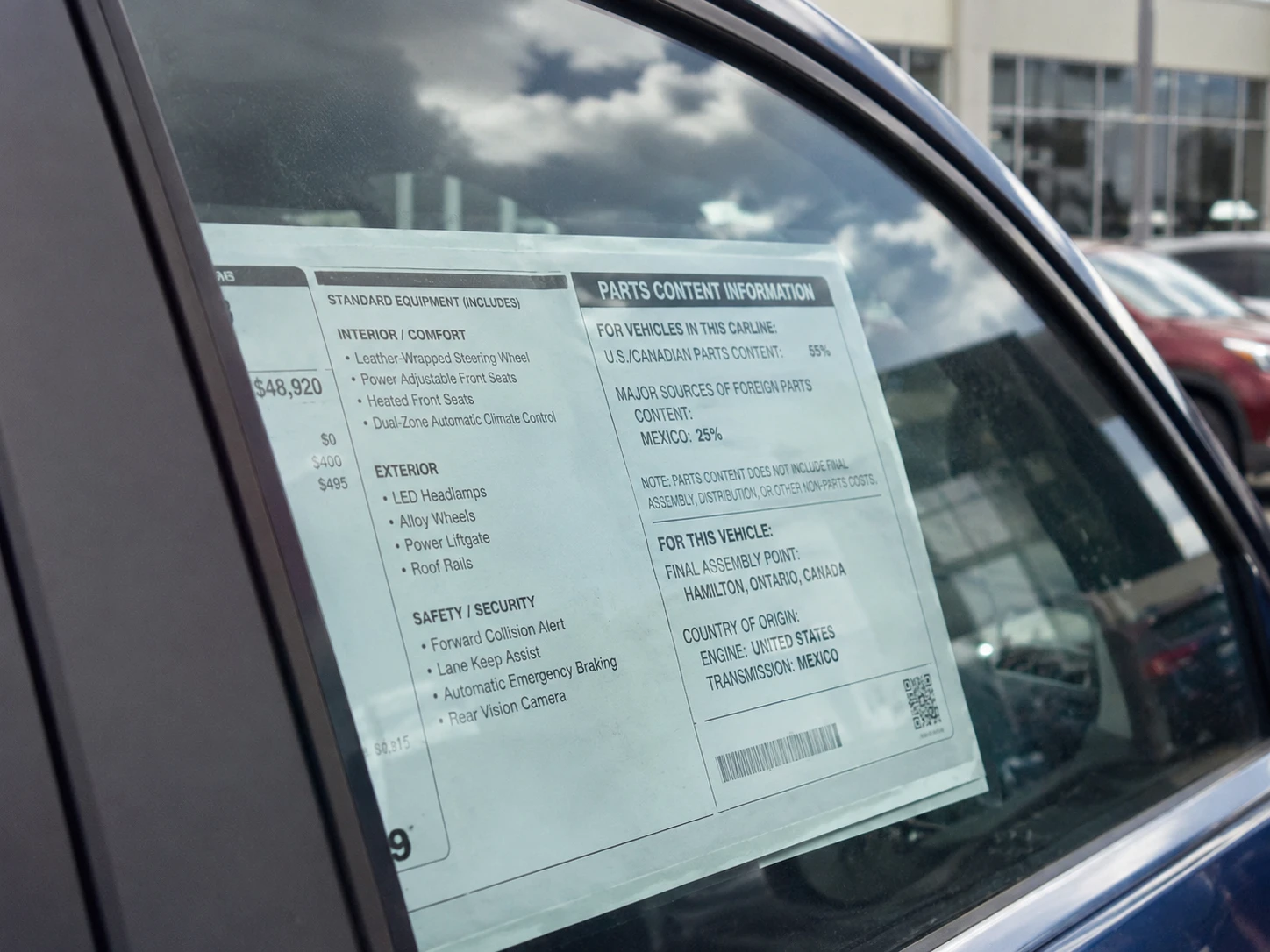
U.S. content means the value of parts wholly obtained, produced entirely or substantially transformed in the United States.
Who can claim the USMCA tariff exemption
Only cars imported from Canada or Mexico that qualify for USMCA preferential treatment can get the lower USMCA auto tariffs. You file by model line with Commerce, by email to Autos232USMCAContent@trade.gov.
Each submission needs certification by your CFO, General Counsel or an equivalent senior officer.
Values: the declared customs value of a car in the model line, its U.S. content and its non-U.S. content. Averages are allowed under the USMCA automotive averaging rules.
Origin proof: the USMCA origin certification and the approved producer certifications for steel, aluminum and labor value content.
Production details: the production locations, the country of final assembly, and the importer, manufacturer, year, make and model for each line.
Past entries: if you want retroactive treatment, list the entry numbers of cars already imported.
Not covered: cars from other countries, Canadian or Mexican cars that don't qualify for USMCA, and auto parts. Cars assembled in the United States fall under a separate proclamation.
Why the car tariffs deadline matters
Without an approval, the 25% applies to the full value of the car, not just its foreign parts. For models with high U.S. content, that difference drives what you pay in USMCA tariffs.
Commerce said it extended the dates because of the number of applications, its staff resources and other work. Importers who missed the September 30 date now have until December 30.
Accuracy matters as much as timing. If CBP finds U.S. content overstated, the 25% applies to the full value of every car in that model line, reaching back to April 3, 2025 where the law allows.
What comes next for auto tariffs on USMCA cars
Commerce reviews each submission and may ask for more documents. Once it sets a model's U.S. and non-U.S. values, it tells the importer and sends CBP a list of approved importers and models.
New models can apply at any time. Their approvals run from the filing date to the next March 1.
If a sourcing change lowers a model's U.S. content, you must tell Commerce promptly and ask for a new determination.

Key dates
March 26, 2025: Proclamation 10908. The President set a 25% tariff on imported cars and certain parts under Section 232.
May 20, 2025: Procedures published. Commerce set up the U.S. content process for USMCA cars.
August 19, 2026: Timelines aligned. Commerce moved cars onto a December 1 cycle with a September 30, 2026 deadline.
November 27, 2026: Deadlines extended. Existing approvals now run to March 1, 2027, and the cycle moves to March 1.
December 30, 2026: Submissions due. File for cars imported on or after March 1, 2027.
March 1, 2027: Old approvals expire. New approvals cover cars imported before March 1, 2028.
How to check your USMCA auto tariffs filing
List your model lines. Note each Canadian or Mexican model you import and whether it has a current approval.
Confirm USMCA origin. Make sure each model has a valid origin certification and approved producer certifications.
Rebuild the U.S. content values. Use current sourcing, not last year's, and document the parts counted as U.S. content.
Get senior sign-off. Have your CFO, General Counsel or an equivalent officer certify the submission.
File by December 30, 2026. Email the package to Autos232USMCAContent@trade.gov and mark any confidential business information.
Track sourcing changes. Report any drop in U.S. content to Commerce promptly to avoid retroactive duties.
Frequently asked questions
What is the USMCA tariff exemption for cars?
It isn't a full exemption. For approved USMCA models from Canada or Mexico, the 25% Section 232 tariff applies only to the non-U.S. content, not the U.S. parts.
Do USMCA auto tariffs apply to auto parts?
This process covers whole cars only. The procedures say they don't set up a U.S. content process for auto parts.
What happens if I miss the December 30 deadline?
Commerce calls December 30 the date that ensures timely processing. Until a model is approved, the tariff applies to the car's full value.
What are car tariffs on Mexico and Canada based on?
They come from Proclamation 10908 under Section 232 of the Trade Expansion Act of 1962. USMCA status decides whether the U.S. content rule can lower them.
This article is informational and is not legal or customs advice.