Trade news
Heightened Requirements for Foreign Importers of Record
CBP published an interim final rule on November 6, 2026, that limits how a foreign importer of record can enter goods into the United States. From January 5, 2027, a foreign importer of record must be CTPAT validated or file through a CTPAT-validated licensed customs broker.

Foreign importer of record rule: the key numbers
The rule (CBP Dec. 26-19) adds a new test for who counts as a US importer of record. Anyone who fails it is a foreign importer of record and faces new entry limits.
January 5, 2027: the rule takes effect
The rule applies to entries filed on or after that date. It is also the deadline for public comments and for brokers to ask for more time.
32%: foreign importers who must change brokers or join CTPAT
Only 0.4% of foreign importers of record are CTPAT validated, and 68% already use CTPAT-validated brokers. CBP says the other 32% can't keep importing unless they switch brokers or get validated.
21%: share of active customs brokers that are CTPAT validated
About 78% of active brokers are not CTPAT validated. From January 5, 2027, they can no longer file for a foreign importer of record that isn't validated itself.
51%: the US ownership test
A company qualifies as a US importer of record only if at least 51% of its beneficial owners are US citizens or permanent residents with control. The alternative is owning a significant amount of unencumbered US real estate.
$1.01 billion: unpaid bills owed by foreign importers
That is what foreign importers without CTPAT validation owed CBP in open bills as of February 6, 2026. CBP says it recovers 3.1% of lost revenue from foreign importers, compared with 15.2% from US importers.
CTPAT: the Customs Trade Partnership Against Terrorism, CBP's program that vets a company's supply chain security before validating it.
Who counts as a foreign importer of record, and what's covered
The rule creates a new Part 110 in title 19 of the Code of Federal Regulations. It defines a US importer of record and treats everyone else as foreign.
A US address or a US incorporation is no longer enough on its own. CBP looks at substance: who owns the company, where its people work and where its assets sit.
US individuals: a US citizen or lawful permanent resident qualifies as a US importer of record.
US companies: the entity must be located in and organized under the laws of the United States. It must also meet the 51% ownership test or the real estate test at all times.
Beneficial owners: this means any person who controls the company or owns at least 25% of it. CBP looks through layers of parent companies to the actual people.
Entries covered: all formal entries, plus informal entries on CBP Form 3461 or 7501 (entry types 11, 12 and 13). Withdrawals from bonded warehouses and foreign trade zones count too.
US importers must declare: every US importer of record must declare its status when it files the entry and the entry summary.
CBP can also weigh where the principal place of business is, whether the company pays US staff, and whether it holds enough US cash, inventory or equipment. CBP's Center Directors make the final call.
Why CBP is tightening importer of record rules
The rule carries out Executive Order 14411, "Strengthening Customs Enforcement," signed June 3, 2026. CBP says foreign shell companies with a US mailing address have been used to undervalue goods and skip duty bills.
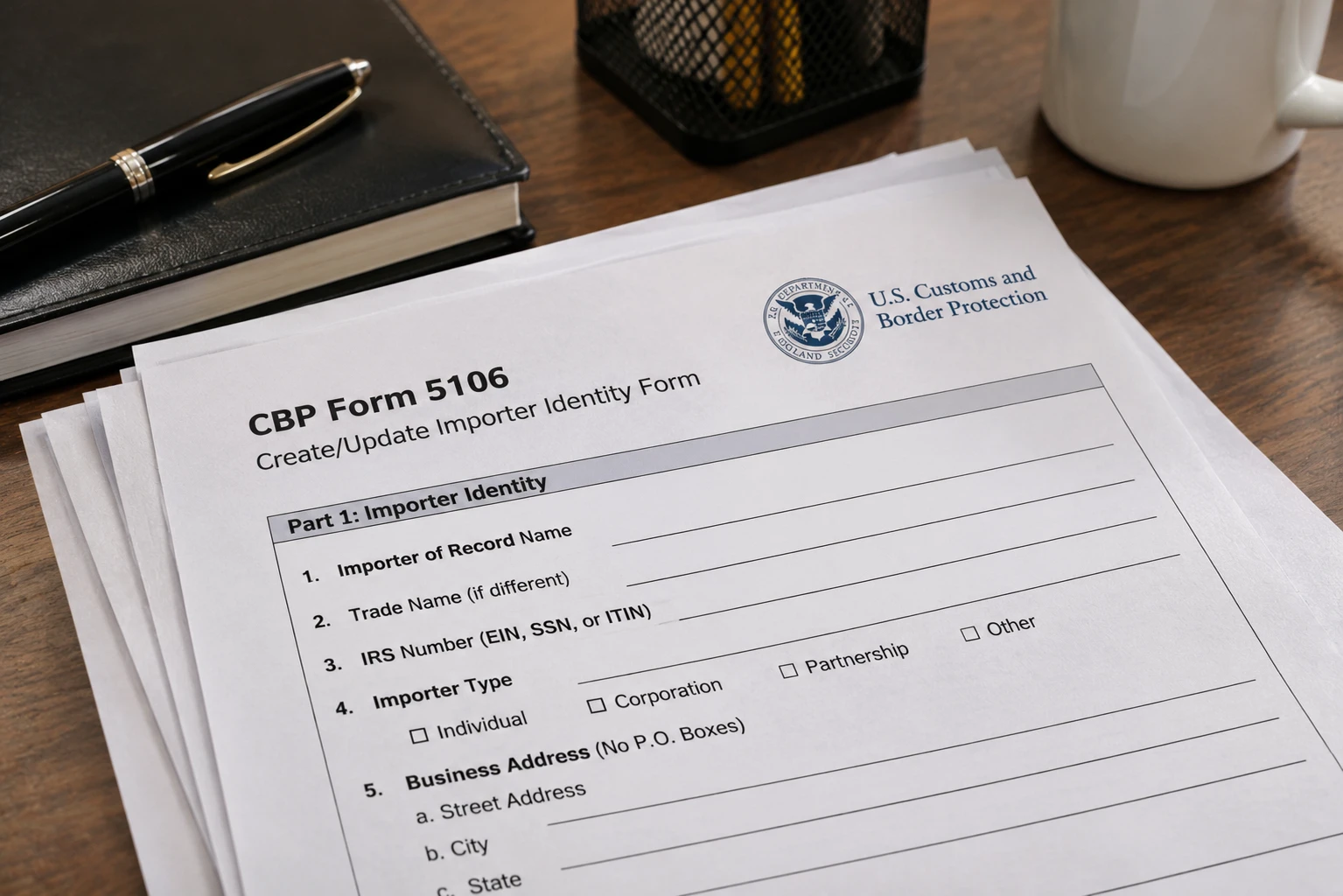
Today, a foreign company can become an importer of record just by filing Form 5106 or using an IRS number. CBP says many list a US agent's address and have no US assets to collect from.
The rule also shifts work onto brokers. A broker must check a client's records before declaring it a US importer of record, and keep those records for five years.
What comes next for customs brokers and CTPAT
Foreign companies that act as their own importer of record should confirm their broker's CTPAT status now. If the client isn't the owner or purchaser of the goods, the CTPAT broker must act as importer of record itself.
Brokers can ask for delayed compliance with the verification duty by January 5, 2027. If CBP accepts, they have until May 6, 2027, and no further extensions are planned.
CBP chose not to ban foreign importers from informal entry for now, though the executive order called for it. It says it will watch those entries and may impose the ban later.
Key dates
June 3, 2026: Executive Order 14411 signed. It directed CBP to restrict entry by foreign importers of record.
November 6, 2026: Interim final rule published. CBP Dec. 26-19 appears at 91 FR 69977.
January 5, 2027: Rule takes effect. Comments under docket USCBP-2026-1387 and broker requests for delayed compliance are also due.
May 6, 2027: Full broker compliance. All brokers must meet the verification and recordkeeping rules by this date.
How to check your foreign importer of record status
Map your ownership. List every person who owns at least 25% of your company or controls it, through any parent companies. Check whether US citizens or permanent residents make up at least 51%.
Gather the proof. CBP and brokers may ask for proof of citizenship or residency, corporate charters, financial statements, purchase receipts or property titles. Keep them ready.
Ask your broker about CTPAT. If you may be a foreign importer of record, confirm your broker is CTPAT validated before January 5, 2027. If not, line up one that is.
Update your Form 5106. Make sure your importer identity record matches your real ownership and address. An inaccurate US declaration can trigger live entry and loss of immediate delivery.
Brokers: decide on delayed compliance. Email the Broker Delayed Compliance Request Form to DelayedCompliance@cbp.dhs.gov by January 5, 2027. Brokers under certain enforcement actions are not eligible.
Frequently asked questions
What is an importer of record?
The importer of record is the party responsible for an entry. It files with CBP, pays duties and answers for compliance. Under the new rule, every importer of record is either a US importer or a foreign importer.
What is a foreign importer of record?
It is any importer of record that doesn't meet the US test in 19 CFR 110.2. That includes some US-incorporated companies whose owners are mostly outside the United States.
Can a foreign company still import into the US after January 5, 2027?
Yes. It must be CTPAT validated itself or use a licensed customs broker that is CTPAT validated. CBP says a broker license alone is no longer enough.
What happens if an importer wrongly declares US status?
CBP can require live entry, meaning duties are paid before release, and end immediate delivery privileges. Brokers can face penalties under 19 U.S.C. 1592 or action against their license.
This article is informational and is not legal or customs advice.