Trade news
Coated lining, knit shell: why CBP put this jacket in 6101, not 6113
CBP ruled on October 9, 2026 that the jacket HTS code for a men's knit polyester jacket from Bangladesh is 6101.30.2010, not 6113.00.9025. The coated lining didn't count, so the general duty is 28.2% instead of the 7.1% that the proposed code carries.
Jacket HTS code 6101 vs 6113: the duty rates
For clothing tariffs, the jacket HTS code sets the starting duty rate. These are the codes in play for this jacket, with the general rates the USITC lists.
6101.30.2010: 28.2%, the code CBP chose
This line covers men's knit overcoats, anoraks, windbreakers and similar jackets of man-made fibers. CBP gave the 28.2% general rate in ruling N365358, and the USITC lists the same rate.
6113.00.9025: 7.1%, the code the request proposed
Heading 6113 covers garments made up of knitted fabrics of heading 5903, 5906 or 5907. Those headings hold fabrics coated, covered or laminated with plastics, rubberized fabrics and other coated fabrics.
Subheading 6113.00.90 carries a 7.1% general rate. Its suffix 25 covers men's or boys' coats and jackets that aren't of cotton.
21.1 points: $2,110 on a $10,000 entry
The general rate is 28.2% under 6101.30.20 and 7.1% under 6113.00.90. On a $10,000 entry, that is $2,820 in duty instead of $710, before any additional duties.
6210.20.5029: 7.1% when the woven shell is coated
In May 2026, CBP used this code for the outer jacket of a men's 3-in-1 style from Bangladesh. Its woven polyester shell had a visible polyurethane coating on the inner surface (N351827).
General rate means the duty in the HTS general column, charged as a percent of value. It leaves out additional Chapter 99 duties, which N365358 does not address.
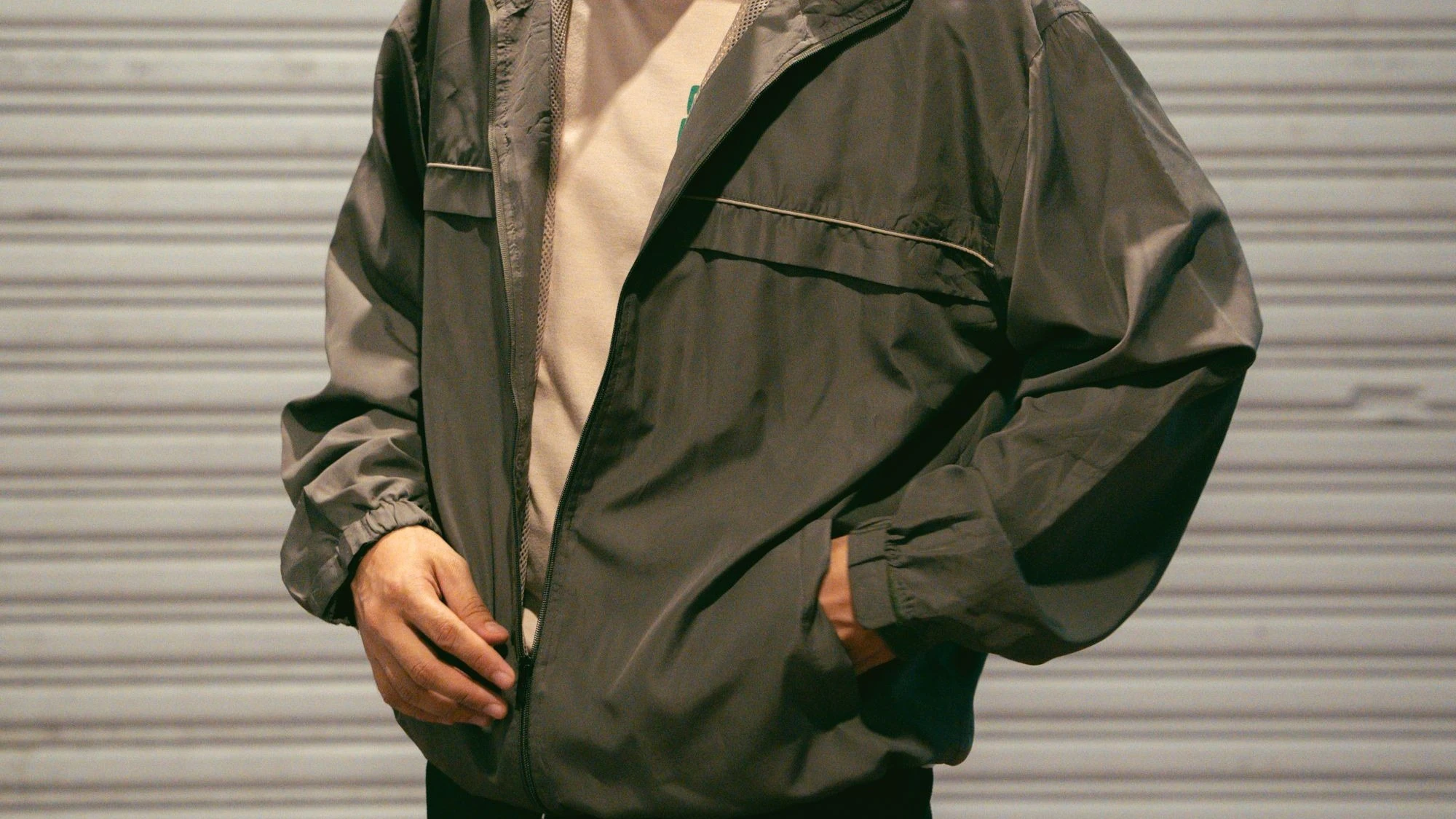
The polyester jacket CBP classified (HTS 6101.30.2010)
Oceanland Service Inc. of Irwindale, California, asked for the ruling on behalf of G-Tex in a letter dated September 23, 2026. It covers style LMSP005, a men's jacket from Bangladesh.
The request said the lining fabric passes the water-resistant provisions in Chapter 62, and it proposed 6113.00.9025. It also said the lining meets the AATCC 35 test.
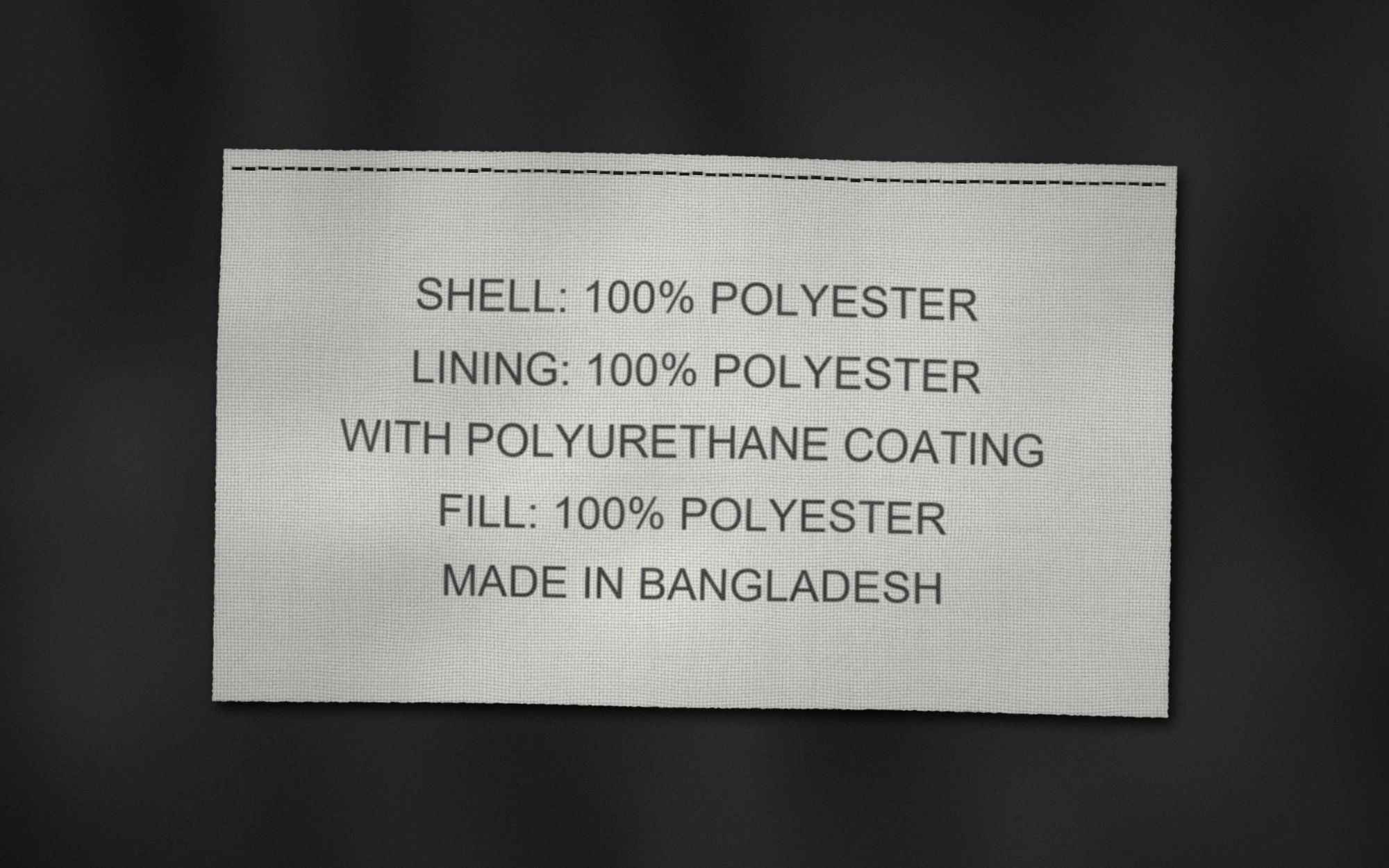
Outer shell: 100% polyester knitted fabric.
Lining: 100% polyester woven fabric with a visible polyurethane coating on its inner surface, quilted to a nonwoven batting.
Features: a full front zipper, a pointed collar, long hemmed sleeves, patch pockets below the waist and a hemmed bottom.
CBP's answer: 6101.30.2010 at a 28.2% general rate, in ruling N365358 of October 9, 2026.
The ruling applies only to the jacket as described in the request, under 19 CFR 177.9(b)(1). If the facts change, CBP asks for a new ruling request under 19 CFR 177.2.
Why the PU coated lining didn't change the tariff classification
CBP's reply was short: "We disagree." It wrote that the classification is based on the outer shell of the garment, not the lining, and this shell is knit.
Heading 6113 names knitted fabrics of heading 5903, 5906 or 5907. On this jacket, the knit fabric was the shell, and the coating was on the woven lining.
The water test didn't change the result. CBP noted that Chapter 62 defines water resistant for certain subheadings in Additional U.S. Note 2, and Chapter 61 has no matching provision.
Under that note, no more than 1.0 gram of water may get through after two minutes at a head pressure of 600 millimeters. The test is AATCC Test Method 35.
The note lets the water resistance come from a rubber or plastics application to the outer shell, lining or inner lining. But it applies only to the Chapter 62 subheadings it lists, such as 6201.40.70 and 6202.40.70.
Two Bangladesh rulings this year show what the layer can mean. A woven shell with a visible polyurethane coating went to 7.1% (N351827). A coated woven lining under a knit shell left this jacket at 28.2%.
Coated fabric in the shell: what other CBP rulings show
CBP's jacket rulings from the past year, along with the HTSUS chapter notes, show when a coating or finish moves the code.
Coated woven shell: heading 6210. Berne Apparel's 3-in-1 jacket had an outer jacket of woven polyester with a visible polyurethane coating. CBP put it in 6210.20.5029 at 7.1% (N351827).
Laminated shell: heading 6210. Nexarina's women's ski jacket from China had a three-layer shell with a polyurethane and polypropylene membrane. Citing Chapter 59 Note 3 on laminates, CBP put it in 6210.30.5020 at 7.1% (N363543).
Coated knit shell: heading 6113. Apart from babies' garments, Chapter 61 Note 8 sends a knit garment that fits both 6113 and another Chapter 61 heading to 6113. Chapter 62 Note 6 does the same for 6210.
Knit pile: still 6101. Chapter 60 Note 1(c) keeps coated or laminated knit pile in heading 6001. So a sleeveless jacket of woven fabric, polyurethane film and knit pile went to 6101.30.2010 (N351214).
Water repellent knit: still 28.2%. Grundens USA's knit fleece jackets from Guatemala had a durable water repellent finish. CBP said a water-resistant subheading doesn't apply under a knit heading (N361819).
Woven jacket: the water test decides. A woven women's pullover jacket is 7.1% under 6202.40.7000 if it passes the Note 2 test, and 27.7% under 6202.40.7511 if not (N359709).
Plain knit: 28.2%. Men's jackets of polyester knit fleece from Vietnam and of polyester and elastane knit from Bangladesh both went to 6101.30.2010 (N365526, N355506).
For style LMSP005, a copy of the ruling or its number should go with the entry documents. CBP may also verify the facts the ruling describes.
The ruling notes that a Chapter 99 number may have to be reported with 6101.30.2010. CBP points importers to its CSMS messages and its Trade Remedies page for details.
Key dates
November 25, 2025: knit jacket from Bangladesh. CBP classified a Strauss Operations men's jacket of polyester and elastane knit in 6101.30.2010 (N355506).
April 3, 2026: woven jacket and the water test. CBP set 7.1% for a woven women's jacket that passes the Chapter 62 water test, and 27.7% if it doesn't (N359709).
May 4, 2026: coated woven shell. CBP put a 3-in-1 jacket's coated outer jacket in 6210.20.5029, and its inner jacket, bonded to knit pile, in 6101.30.2010 (N351827).
June 15, 2026: water repellent knit fleece. CBP said a water-resistant subheading doesn't apply to garments under a knit heading (N361819).
August 21, 2026: laminated ski jacket shell. CBP classified a women's ski jacket with a three-layer laminated shell in 6210.30.5020 (N363543).
September 23, 2026: ruling request. Oceanland Service Inc. asked CBP to classify style LMSP005 for G-Tex, proposing 6113.00.9025.
October 7, 2026: knit fleece jacket from Vietnam. CBP classified a Design Resources men's fleece jacket in 6101.30.2010 (N365526).
October 9, 2026: ruling N365358. CBP classified style LMSP005 in 6101.30.2010 at a 28.2% general rate.
How to find the right jacket HTS code
Identify the outer shell fabric. Knit garments fall in Chapter 61 and woven ones in Chapter 62. If the shell mixes fabrics, CBP asks which one gives the essential character (GRI 3(b), N361819).
Record the fiber content by weight. Men's knit jackets of polyester and other man-made fibers fall in 6101.30, and cotton ones in 6101.20 at 15.9%. Within 6101.30, jackets with 25% or more leather or 23% or more wool, by weight, have their own lines.
Check whether the shell fabric itself is coated or laminated. A visible plastics coating or a bonded plastics film can point to 6113 for knits or 6210 for wovens. A coated lining alone did not count in N365358, and coated or laminated knit pile stays in heading 6001.
Test water resistance only where the heading asks. For woven jackets, passing AATCC 35 under Additional U.S. Note 2 to Chapter 62 can mean 7.1% instead of 27.7%. Knit headings have no water-resistant subheading.
Confirm men's or women's. Chapters 61 and 62 treat left over right closures as men's and right over left as women's, unless the cut clearly shows otherwise. A style that can't be identified either way goes to the women's or girls' headings.
Check rulings and the HTS before you file. Search CBP's CROSS database for jackets built like yours, and confirm the current rate. For a close call, you can request a ruling under 19 CFR Part 177, as Oceanland did for G-Tex.
Frequently asked questions
What is an HTS code?
An HTS code is the tariff classification number for a product in the Harmonized Tariff Schedule of the United States. The first 8 digits set the duty rate, and the last 2 are a statistical suffix. In 6101.30.2010, 6101.30.20 carries the 28.2% rate and the suffix 10 marks men's jackets.
What is the jacket HTS code for a knit polyester jacket?
For men's knit polyester jackets, recent CBP rulings use 6101.30.2010 at a 28.2% general rate. Women's knit polyester jackets went to 6102.30.2010, also at 28.2% (N361819). A coated or laminated shell fabric can change the heading.
Does a PU coated lining change the tariff classification?
Not when the shell is knit. In N365358, CBP said classification is based on the outer shell, not the lining. For woven jackets, a coated lining can count toward the Chapter 62 water-resistance test.
When does a coated fabric jacket go to 6113 or 6210?
When the shell fabric itself is coated or laminated, as headings 5903, 5906 and 5907 define it. A plastics coating must be visible to the naked eye. Knit garments of such fabric go to 6113 and woven ones to 6210, but laminated knit pile jackets have stayed in 6101.
Do Bangladesh tariffs change the jacket HTS code?
No. Additional duties are reported with a Chapter 99 number alongside the classification, which stays 6101.30.2010. N365358 gives only the 28.2% general rate and does not address additional duties.